
Parashat Re'eh — Deuteronomy 11:26–16:17
There is a moment, right at the start of this week's Torah portion, that always stops me.
Moses stands before an entire people — hundreds of thousands of them — and he doesn't say "See, all of you." He says it in the singular. "Re'eh" — "See," as if he were speaking to one person. To you. To me.
"See, I set before you today a blessing and a curse." (Deuteronomy 11:26)
A whole nation is standing there, and yet the word lands like a hand on a single shoulder. Because some things can only be understood one heart at a time.
The name is the message
Every parashah carries its name for a reason, and this one is almost startlingly direct. Re'eh. See.
Not listen. Not believe. See.
Seeing asks something of us that hearing doesn't. To truly see is to stop, to look closely, to let something register. In a week — in a year — where everything moves fast and the noise never quite stops, the Torah opens with a single quiet instruction: look. Look at what is actually in front of you. Notice the choice you're standing inside of, even when it's disguised as an ordinary day.
Because that's the second half of the verse. Seeing isn't passive. It leads somewhere. A blessing and a curse — and the freedom, always, to choose.
The open hand
Deeper into the parashah comes a line I think about often. When the Torah speaks of someone in need, it doesn't leave generosity to the mood of the moment. It commands it:
"Do not harden your heart or close your hand… rather, open your hand wide." (Deuteronomy 15:7–8)
In Hebrew it's even more beautiful — pato'ach tiftach et yadecha, a doubling of the word "open," the way Hebrew does when it really means it. Open, you shall open your hand.
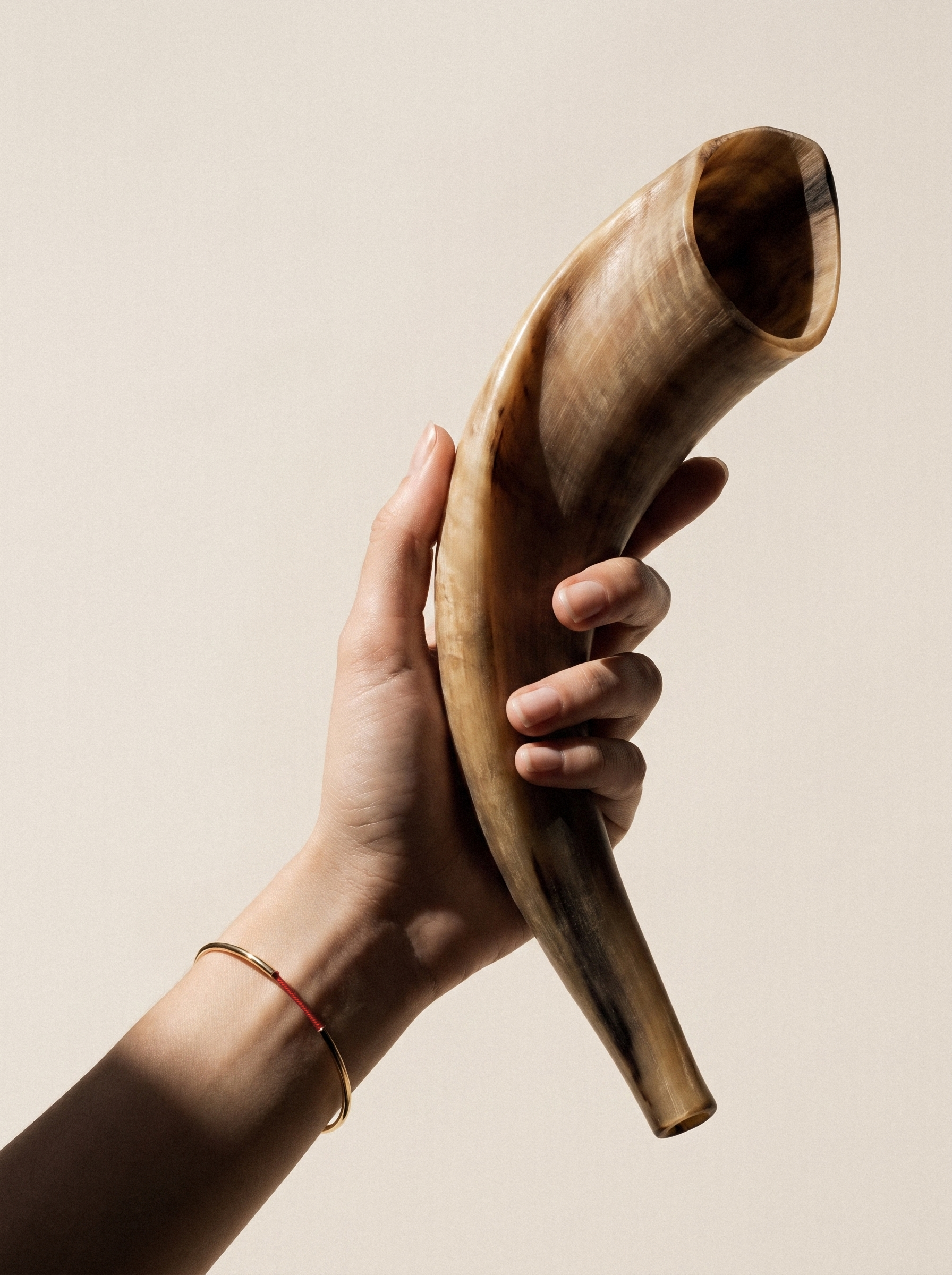
I love that the Torah frames giving as something you do with your body. An open hand. Not an open wallet, not an open calendar — an open hand. It's a posture before it's an amount. And it's the opposite of the hardened heart the verse warns against. You cannot clench your fist and open your heart at the same time.
This is the part of Oriya that isn't about jewelry at all. It's why €18 from every piece we make goes to children who need it — €18, the numerical value of Chai, life. Not because a bracelet changes the world, but because the small, repeated act of keeping your hand open is its own kind of practice. Re'eh reminds me that generosity was never meant to be a feeling we wait for. It's a habit we choose.
Standing at the doorway of Elul
There's a reason this portion arrives now, and not by accident.
This Shabbat is the last one before Rosh Chodesh Elul — the beginning of the final month before the High Holidays. Elul is the season of return. The month where, traditionally, we take an honest look at the year behind us and the person we've been inside it. The Baal Shem Tov taught that in Elul, "the King is in the field" — the holiness that usually feels distant comes close, walks among us, is reachable.
And what does a month of return begin with? Re'eh. See.
See clearly. See yourself honestly. See the blessing that's been quietly in front of you, and the choice to reach for it. Elul doesn't ask us to become someone new overnight. It asks us to look — and then to open our hand, a little wider than last year.
Something to carry
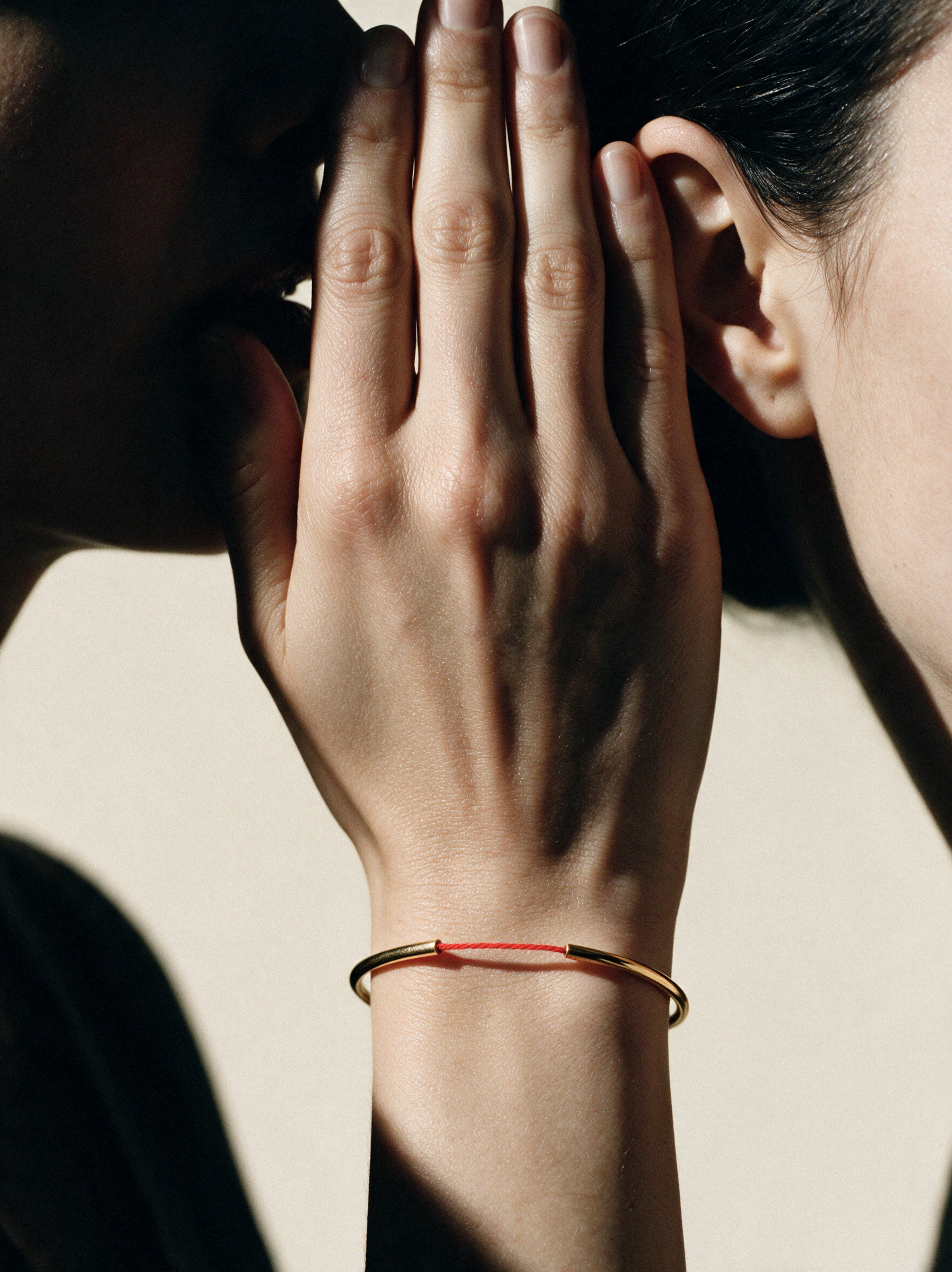
I think this is why so many of us wear a piece of meaning against the skin. Not as decoration. As a reminder.
A thread. A Chai. A small Hebrew letter resting at the collarbone. Something you glance down at in the middle of an ordinary Tuesday that says: see. choose blessing. keep your hand open. The jewelry isn't the point. The remembering is.
As we walk into Elul, that's my blessing for you — the same one Moses set down all those years ago, in the singular, as if to each of us alone: that we would have the eyes to see the good in front of us, and the courage to choose it.
Shabbat Shalom. 🤍
With love,
Rivkah