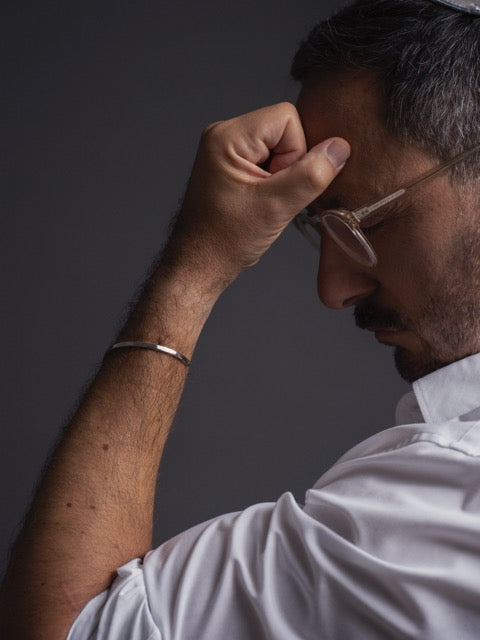


There is a particular quiet that comes the morning after Tisha B'Av.
The fast has ended. The candles have burned down. We have sat on the floor, read Eicha by low light, and let ourselves feel the weight of everything that was lost — two Temples, centuries apart, on the same date. And then, slowly, the world is asked to stand up again.
The Shabbat that follows is not an ordinary one. It has a name: Shabbat Nachamu — the Shabbat of Comfort.
"Comfort, comfort My people"
The name comes from the opening words of the haftarah we read this week, from the prophet Isaiah:
"Nachamu, nachamu ami" — Comfort, comfort My people, says your God. (Isaiah 40:1)
After three weeks of mourning, after the deepest fast of the year, the very first word the prophet speaks is comfort. Not an explanation. Not a reason. Not a promise that the loss was worth it. Simply: be comforted.
And the sages noticed something. The word is said twice. Nachamu, nachamu. Why?
Some say it is a double comfort — one for each Temple. Others read it more tenderly: that God comforts us, and asks us to comfort one another. And there is a reading that stops the heart a little — that the doubling is not for emphasis at all, but because real comfort often has to be said more than once before a grieving person can hear it.
Shabbat Nachamu is the first of the Sheva d'Nechemta, the Seven Haftarot of Consolation — seven weeks of the prophet's words that carry us, slowly, from the ashes of Av all the way to Rosh Hashana and the new year. Consolation, it turns out, is not a single moment. It is a season.
The week we read an unanswered prayer
This week's Torah portion is Va'etchanan — "And I pleaded."
It opens with Moses at the edge of the land he has walked toward for forty years, begging to be allowed to cross into it. The tradition tells us he prayed five hundred and fifteen times — the numerical value of the word va'etchanan. And the answer, every time, was no. He would see the land, but he would never enter it.
There is something almost unbearable in the timing. The very week we read Moses' unanswered prayer is the week the Torah turns and says: be comforted.
Because comfort, in Judaism, has never meant getting what we asked for. Moses did not get what he asked for. The Temples were not rebuilt the morning after the fast. Comfort is something else — quieter, and in a way harder. It is the promise that we are not left alone in the wanting.
The words we hold closest
It is no accident that this same portion holds the Shema — Shema Yisrael, Hashem Elokeinu, Hashem Echad. Hear, O Israel: the Lord is our God, the Lord is One.
These are the words a Jew says last thing at night and first thing in the morning. The words said at the edge of sleep, at the edge of life, in the hardest moments a person can know. And right after them: Ve'ahavta — and you shall love. Bind these words upon your hand. Keep them before your eyes. Hold them close.
The Torah's instruction is almost physical. Don't only believe the words — carry them. Keep them where you can feel them.
That is what comfort looks like in our tradition. Not a grand rebuilding. A small, worn thread of continuity that we keep against the skin, so that even on the floor of Tisha B'Av, even in the middle of an unanswered prayer, we are still holding on to something — and something is still holding on to us.
Seven weeks, one step at a time
The mystics noticed something in the calendar. The seven weeks of consolation — from Tisha B'Av to Rosh Hashana — echo the seven lower sefirot, the seven attributes of the heart through which, in Kabbalah, the whole world is built: Chesed and Gevurah, Tiferet, Netzach and Hod, Yesod and Malchut.
And in that echo is something quietly true about our own lives. After a loss, we are not comforted all at once. We rebuild ourselves the way the calendar does — one attribute at a time. First kindness toward ourselves again (Chesed). Then the strength to hold a boundary (Gevurah). Then the balance to carry grief and hope at once (Tiferet). Endurance (Netzach). Gratitude (Hod). Connection (Yesod). And finally, standing back up in the world (Malchut).
Seven weeks. Seven steps back to yourself. Consolation, the mystics understood, is not a moment you are given — it is a structure you climb.
From the ashes, forward
By the end of the month, we will reach Tu B'Av, one of the most joyful days of the year — arriving just six days after the saddest. From mourning to dancing, in a single fortnight. That is the shape of the Jewish year, and perhaps the shape of a Jewish life: we do not pretend the grief away, and we do not let it have the last word.
Shabbat Nachamu is the hinge between the two. It does not ask us to forget what we mourned last night. It asks us to let ourselves be comforted anyway.
May your mourning be turned to comfort, and may this be a Shabbat of peace.
Shabbat Shalom. 🤍