
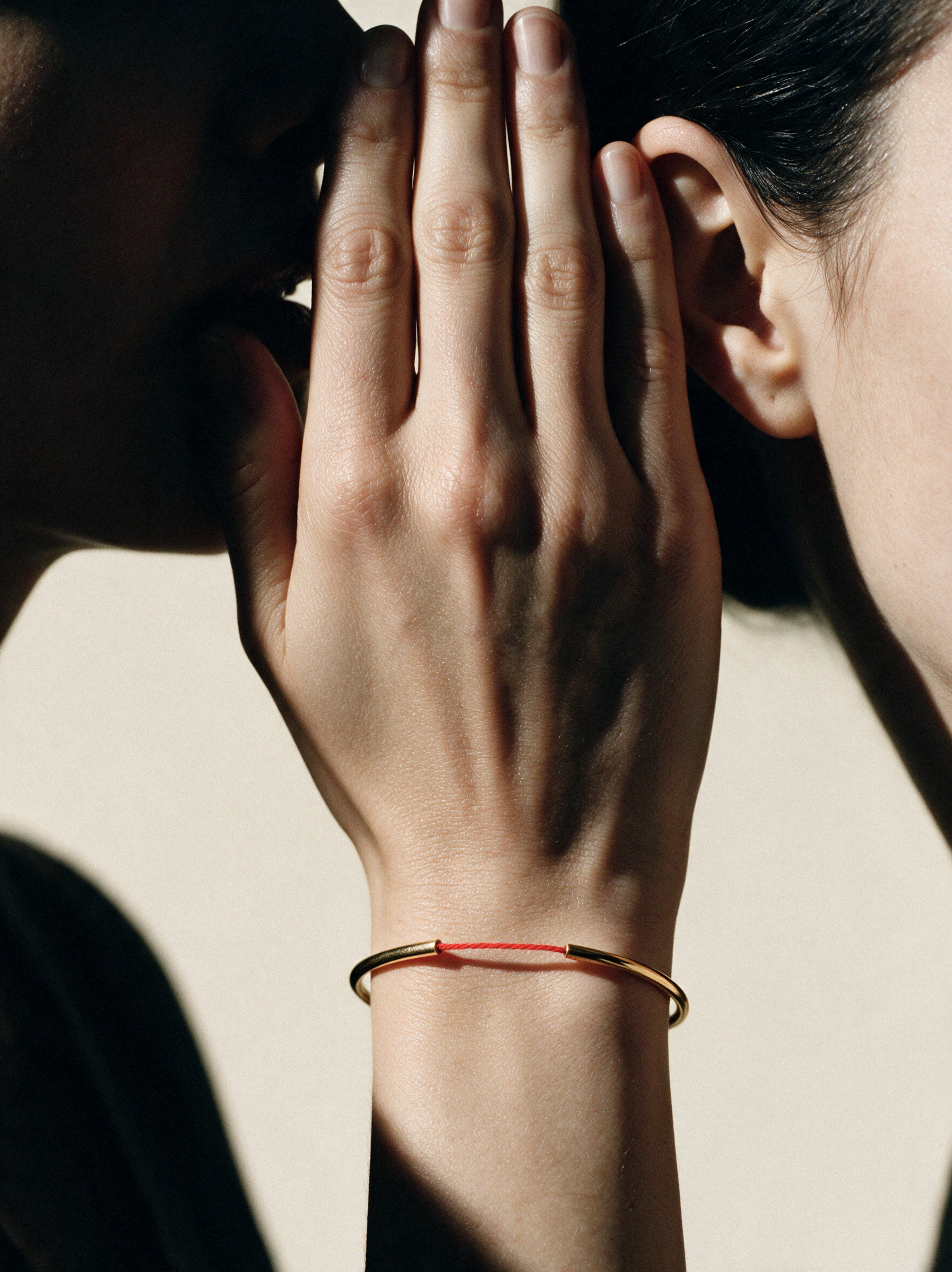

There is a hand that has been raised in protection for over three thousand years.
You have seen it — five fingers spread wide, an eye sometimes at its center, rendered in gold or silver, hanging from a necklace or etched into a bracelet. You may have worn it without knowing exactly what you were carrying. You may have received it as a gift from someone who knew.
The Hamsa is one of the most recognized symbols in the world. But its story is older and deeper than most people realize.
Where Does the Hamsa Come From?
The word Hamsa (חַמְסָה) comes from the Hebrew and Arabic word for five — the number of fingers on the open hand. Archaeologists have traced protective hand amulets back to ancient Mesopotamia, Carthage, and ancient Egypt, where the hand of the goddess Tanit was widely worn for protection. The symbol migrated across cultures and centuries, appearing in Jewish, Islamic, and Christian traditions alike, always carrying the same essential meaning: protection, blessing, and the warding off of harm.
In Jewish tradition, the Hamsa became known as the Yad Hashem — the Hand of God. It is also called the Hand of Miriam, in honor of Moses's sister, the prophetess who led the women of Israel in song at the crossing of the Red Sea. To wear a Hamsa is to carry a piece of that history — a gesture of faith that stretches back to the very beginning of the Jewish story.
What Does the Hamsa Protect Against?
The Hamsa's primary purpose has always been protection — specifically against the ayin hara, the evil eye. The belief in the evil eye is ancient and cross-cultural: that envy, jealousy, or malevolent attention can bring harm to a person. The Hamsa, raised outward, is a barrier. A deflection. A quiet declaration that you are protected.
But the Hamsa is more than a defensive symbol. In Kabbalistic tradition, the five fingers correspond to the five books of the Torah, and to the hei (ה) — the fifth letter of the Hebrew alphabet, which appears twice in God's name. To wear a Hamsa is to hold Torah close to your body. To carry God's name without speaking it.
This is the genius of Jewish symbolism: a single shape can hold a universe of meaning.
The Hamsa in Modern Life
Today, the Hamsa has traveled far beyond any single tradition. You find it in the homes of secular and religious Jews alike, worn by people of every background who are drawn to its beauty and its protective energy. It appears on doorposts and in nurseries, on bracelets and on earrings, in galleries and in grandmothers' living rooms.
And yet — even as it has become globally recognized, the Hamsa has not lost its depth. When you understand what it carries, it becomes impossible to look at it as merely decorative. It is a conversation between the ancient and the present. Between protection and beauty. Between what is seen and what is meant.
Wearing the Hamsa: Which Direction?
There is a longstanding question about which way the Hamsa should face. When the fingers point downward, it is said to invite abundance, good luck, and blessings into your life. When the fingers point upward, it deflects negative energy and the evil eye outward. Both orientations are correct. Both have their own power.
Ultimately, the most important thing is what you carry when you wear it — and what you choose to believe it means.
The Hamsa at Oriya Jewels
At Oriya Jewels, the Hamsa appears throughout our collections — not as a logo or a trend, but as a living symbol woven into modern design. In our Shelev and Yesh Me'Ayin pieces, the Hamsa is rendered in clean, contemporary lines that speak to anyone, whether they grew up with this symbol or are encountering its story for the first time.
Every Oriya piece that carries a Hamsa also carries our mission: €18 — the numerical value of Chai, life — donated to charity with every purchase. The hand of protection, and the gift of life. Two ancient ideas, expressed in a single piece of jewelry you can wear every day.
The Hamsa has been raised in protection for three thousand years. Let it protect you, too.
Curious about another powerful Jewish symbol? Discover the meaning of the Chai — the Hebrew symbol of life →