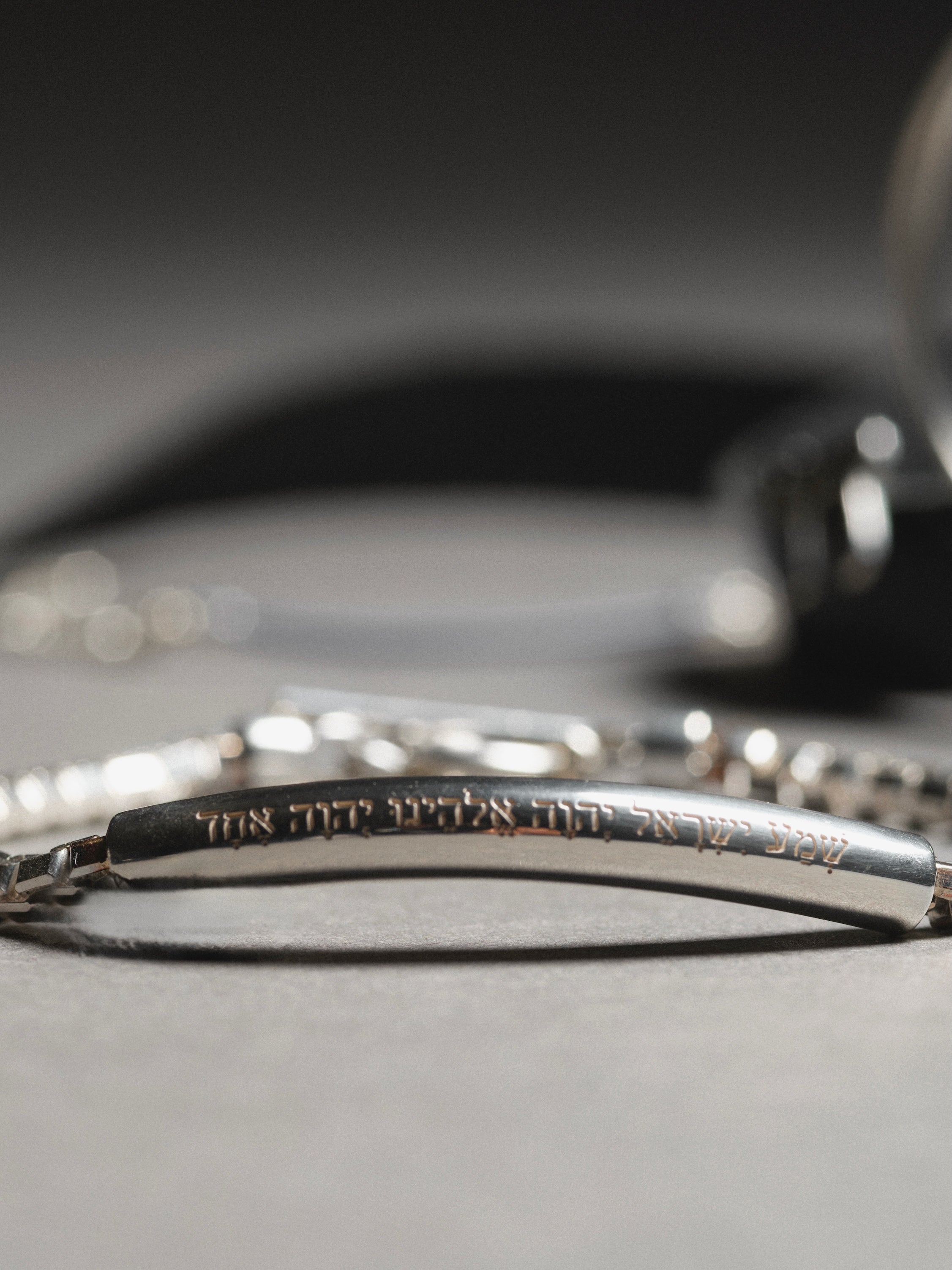
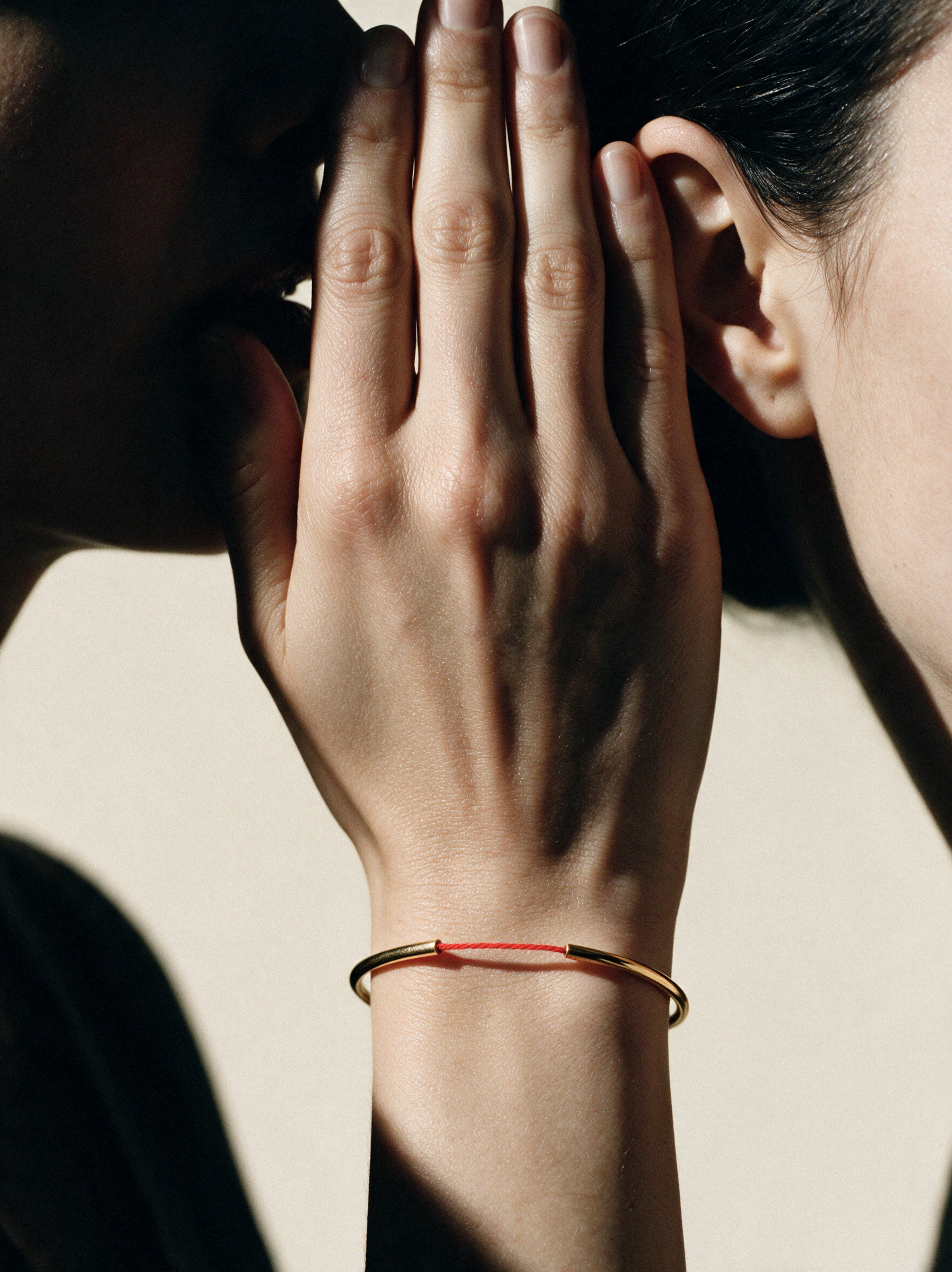

There is a two-letter Hebrew word that has been whispered at bedsides, toasted at tables, and worn close to the skin for thousands of years.
Chai (חי) — pronounced khai, rhyming with “sky.”
It means: living. Alive. Life.
Two letters. Infinite weight.
What Does the Chai Symbol Mean?
The Chai symbol is the Hebrew word for “living” or “life.” It is formed by two Hebrew letters placed side by side:
- Chet (ח) — the eighth letter of the Hebrew alphabet
- Yod (י) — the tenth
Together they spell the word chai, the Hebrew present-tense form of “to live.” So the simplest answer to what the Chai symbol means is exactly that: life. But these two letters do something else too — something that has given the Chai symbol a quiet, electric power across millennia of Jewish life.
In Hebrew, every letter has a numerical value. This system is called Gematria — a form of Jewish mysticism that finds meaning in the mathematics of language.
Chet = 8. Yod = 10. Together: 18.
And with that, a symbol became a number. A number became a blessing. A blessing became a way of moving through the world.
Why 18 Is One of the Most Sacred Numbers in Judaism
If you have ever attended a Jewish wedding, a bar or bat mitzvah, or even a birthday — you may have noticed something. Gifts often arrive in amounts of $18, €18, £36, £54, or any multiple of 18.
This is not coincidence. It is intention.
Giving in multiples of 18 is a way of saying, without words: I wish you life. The gift itself becomes a blessing. The number carries the prayer.
In Jewish tradition, this practice is so deeply embedded that it spans continents, centuries, and communities. Ashkenazi and Sephardic. Orthodox and Reform. Ancient and modern. The 18 crosses all of it.
And it has done so for a reason: because among all the things a human being can wish for another, life — long, full, beautiful, meaningful life — is the first and the deepest.
L’Chaim — To Life
L’Chaim (לְחַיִים) — to life — is the most iconic toast in Jewish culture.
You raise your glass. You look into the eyes of the people you love. And you say: to life.
Not to health (though that too). Not to happiness (though that matters). But to life itself — the whole messy, sacred, fleeting, overflowing thing.
The toast appears in countless places: in the songs of Fiddler on the Roof, at Shabbat tables, at the end of Yom Kippur fasts when the hardest day of the year breaks open into joy. It is said with wine, with schnapps, with sparkling water. What matters is the intention behind it.
When Ashkenazi Jews say L’Chaim, they are not making small talk. They are making a statement about what matters. About the value of this moment. About refusing, even in the hardest times, to let go of the beauty of being alive.
The Chai as an Amulet
Throughout Jewish history, the Chai symbol has been worn as a form of protection and blessing — an amulet of life.
Jewish amulets (kameyot) have existed for thousands of years, inscribed on parchment, carved into silver, hung in doorways, and worn around the neck. The goal was always the same: to invite divine protection, to ward off the evil eye, to hold life close.
The Chai joined the Hamsa and the Star of David as one of the three most powerful protective symbols in Jewish tradition. Where the Hamsa deflects harm and the Star of David connects heaven and earth, the Chai says something simpler and more radical: let this person live.
It was worn by mothers who feared for their children. By soldiers going into battle. By the sick who still hoped. By the healthy who wanted to stay that way.
It was never just decoration. It was a declaration.
Am Yisrael Chai — The People of Israel Live
There is a phrase that has echoed through Jewish history with a resonance that is almost impossible to put into words:
Am Yisrael Chai — עַם יִשְׂרָאֵל חַי
The people of Israel live.
This declaration has been sung, chanted, written on walls, spoken through tears, and shouted in defiance across every century of Jewish existence. After persecution, after pogrom, after genocide — the Jewish people have returned to these three words as both statement and protest.
We are still here. We are still alive. We chose life — again.
After October 7, 2023, these words took on a new depth. Families who had lost everything wore the Chai. Communities that had gathered to grieve found themselves, somehow, singing Am Yisrael Chai because what else do you do when the alternative is silence? Read more on the meaning of Am Yisrael Chai →
The Chai is not naive about suffering. It does not pretend the world is only good. It knows darkness. And it chooses life anyway.
That is, perhaps, its most profound meaning.
Chai in Kabbalah — The Mystical Dimension
In Kabbalistic tradition, the number 18 carries additional significance beyond Gematria.
The Kabbalists taught that life itself is not passive — it flows, it vibrates, it connects. The energy of chai is the same energy that moves through the Sefirot (the divine emanations on the Kabbalistic Tree of Life), the same energy that connects the spiritual and physical worlds.
Wearing the Chai, in this tradition, is not merely symbolic. It is a way of aligning yourself with the energy of life — of saying, with your body, that you are present, awake, and open to what it means to truly be alive.
The Baal Shem Tov, founder of Hasidic Judaism, taught that joy (simcha) is not an emotion but a spiritual practice — a way of honoring the gift of life. The Chai worn at the chest is, in this reading, a constant reminder: you are alive. Act like it.
The Symbol That Carries a Story
What makes the Chai remarkable is how it holds contradiction.
It is ancient and current. Simple and layered. A children’s pendant and a profound theological statement. Two letters that a five-year-old can trace and a scholar can spend a lifetime unpacking.
It is the symbol that shows up in the hardest moments — at shiva, at hospital bedsides, on the walls of communities rebuilding after loss — and also in the most joyful ones: at weddings, at bar mitzvahs, at Shabbat tables overflowing with food and laughter.
It does not choose between grief and celebration. It holds both. It says: life contains all of this. And still — to life.
Common Questions About the Chai Symbol
What does the Chai symbol mean?
The Chai symbol (חי) is the Hebrew word for “life” or “living.” Formed from the letters Chet and Yod, the Chai symbol means life itself — and, through Gematria, it also equals the number 18, the Jewish number of life.
What is the meaning of the number 18 in Judaism?
The number 18 spells chai, “life.” This is why Jewish gifts are so often given in multiples of 18 — to give in 18 is to wish someone life.
What does a Chai necklace mean?
A Chai necklace carries the Hebrew word for life close to the heart. Worn as a blessing and a quiet form of protection, a Chai necklace is a personal declaration — to life — said not in words but in what you choose to wear. Explore the Yesh Me’Ayin Chai Necklace →
Is the Chai a Kabbalah symbol?
Yes. In Kabbalah, the energy of chai is understood as the life-force that flows through the Sefirot on the Tree of Life. Wearing the Chai is seen as a way of aligning with the energy of life.
Chai at Oriya — Where the Symbol Wears You
At Oriya Jewels, the Chai is not an afterthought. It is woven into the DNA of the brand.
Every purchase at Oriya includes a donation of €18 to charity — the Chai number, chosen deliberately. Not €15. Not €20. €18, because every piece that leaves the workshop carries a prayer for life with it.
The Oriya Chai collection includes pieces designed to be worn the way the symbol was always meant to be worn: close to the body, quietly, as a personal declaration.
- The Yesh Me’Ayin Chai Necklace — resting between the collarbones, close to the heart, with a red jade stone for vitality and protection. Yesh Me’Ayin means “something from nothing” — creation itself.
- The Yesh Me’Ayin Chai Bracelet — the same delicate chain from the Chava Collection, the Chai resting quietly at the wrist.
- The Shelev Chai Necklace — the Chai worn at the collarbone; Shelev means calm.
- The Shelev Chai Bracelet — calm and intentional, in sterling silver or gold-plated.
- The Netzach Chai Bangle — Netzach means eternity and endurance, the symbol of life carried with permanence.
- The Nekudah Chai Earcuff — nekudah means a point of light. The most delicate version of the symbol.
- The Chai Cufflinks — for the man who wants to wear his values at his cuff.
Each piece is designed with the same belief: that jewelry is not just beautiful. It is the story you choose to tell about who you are.
To Life
The Chai symbol has survived everything Jewish history has thrown at it.
It has been melted down, hidden, reclaimed, recarved. It has been worn by refugees and kings, by survivors and their grandchildren, by people who never lost their faith and by people who lost it and found it again.
And it is still here.
Two letters. The number 18. A toast. A prayer. A declaration.
L’Chaim — to life.
Every piece from Oriya Jewels includes a €18 donation to charity — because every piece carries the Chai.
Looking for more Jewish symbols? Read our guide to the Hamsa →