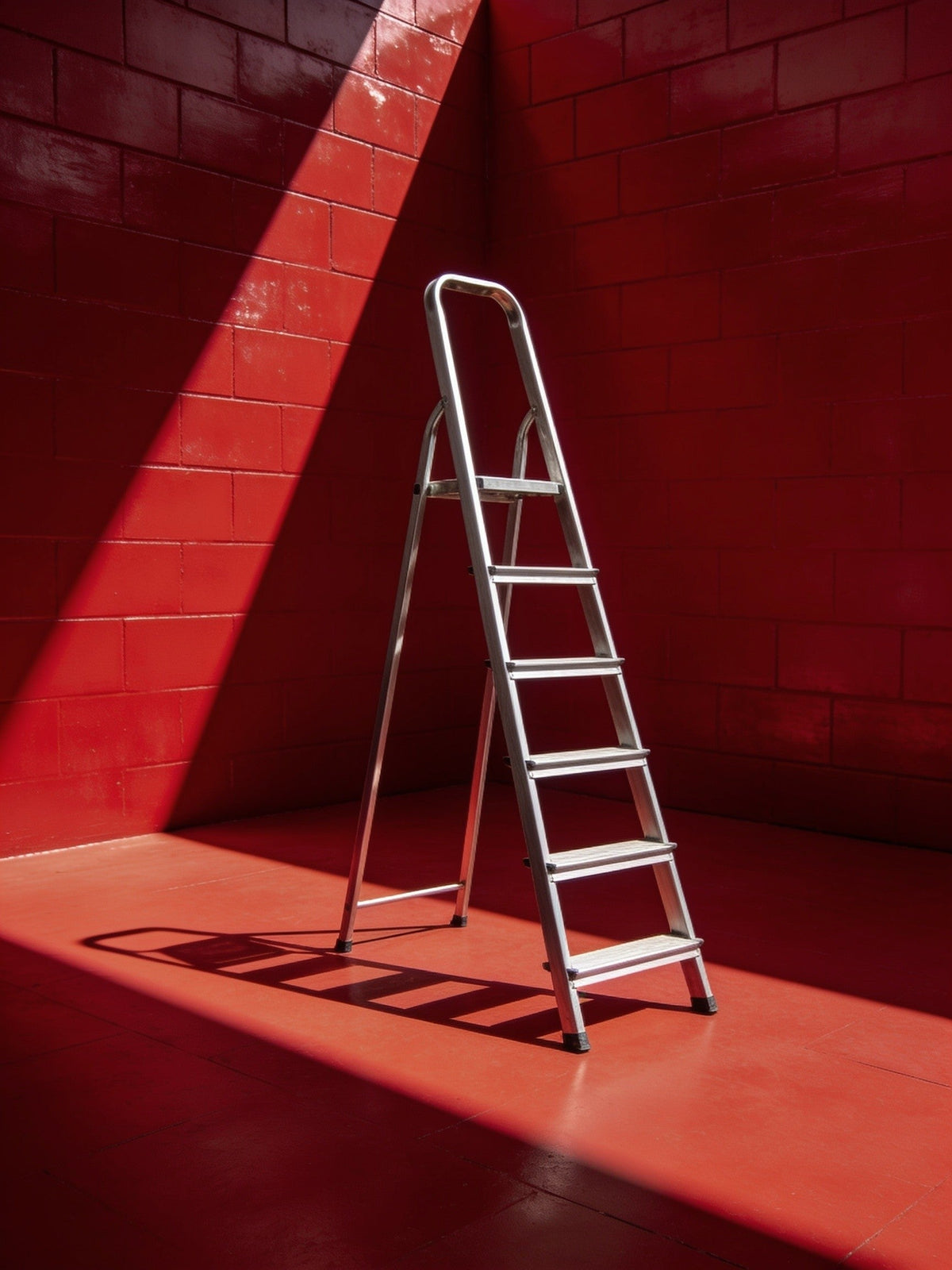

This Friday night the year turns. And on Saturday morning, in synagogues from Munich to Jerusalem to Brooklyn, the shofar will not be blown.
Not because anyone forgot it. Because this year the first day of Rosh Hashana falls on Shabbat, and on Shabbat the shofar stays in its case. The loudest sound of the Jewish year — the one that is supposed to wake you up, the one children wait for, the one that makes grown people cry — is missing on the very day the year begins.
It comes on Sunday. The second day carries the shofar, and tashlich, and the crowds at the water. But the first day, the day the world is said to be judged, passes without it.
I keep thinking about that. A year that starts with the alarm switched off.
The first silence: the horn
The reason is old and almost domestic. The sages worried that someone would pick up a shofar on Shabbat and carry it through the street to an expert to learn how to blow it, and carrying is forbidden on Shabbat. So rather than risk it, they set the shofar down for the day. One sound was given up to protect another thing entirely.
That is worth sitting with for a moment. The tradition chose to lose its most dramatic moment rather than put a boundary at risk. It decided that a quiet Shabbat was worth more than a loud Rosh Hashana.
Most of us would not have made that trade. We are trained to believe the year has to start with something — a declaration, a resolution, something to announce. A sound.
The second silence: the moon
There is a second thing missing on Rosh Hashana, and this one is missing every year.
Rosh Hashana is the only major festival that falls at the new moon. Pesach and Sukkot come at the full moon, when the sky is bright and you can see where you are going. Rosh Hashana comes on the first of the month, when the moon has gone dark and there is nothing to see at all.
The Psalm that the tradition attaches to the day says it outright: tik’u vachodesh shofar, bakese l’yom chagenu — sound the horn at the new moon, at the covered time, for our festival day. Bakese. Covered. Concealed. The Talmud reads that word as a description of the moon itself: the festival that falls when the moon is hidden.
So the year does not begin in daylight. It begins at the darkest point of the month, deliberately. Whatever is being decided about you is being decided while you cannot see it.
If you have ever started something important without knowing whether it would work — a business, a move, a repair to something between you and another person — you already know this month. You do not get to see the shape of it first. You go anyway.
The third silence: Chanah
And then there is the reading itself.
On the first morning of Rosh Hashana, straight after the Torah reading, comes the haftarah — and it is about Chanah. She is childless. She has come to the sanctuary at Shiloh and she is praying, and the text stops to tell us exactly how: she was speaking in her heart, only her lips were moving, and her voice was not heard.
Eli, the priest, watches her and assumes she is drunk. He tells her so. This is a woman at the lowest point of her life, praying in a way nobody had seen before, and the professional in the room reads her completely wrong.
She answers him plainly. She says she is not drunk, she is pouring out her soul. And Eli, to his credit, hears her, and blesses her.
Here is the part that changes everything: the sages went back to that scene and derived from it how Jewish prayer works. From Chanah — from the woman who was misread, whose voice made no sound — they learned that prayer requires the heart, that the lips should move, that you do not shout. The standing prayer that observant Jews say three times a day, quietly, moving their lips, is shaped by a woman nobody could hear.
The unheard prayer became the template.
And Sarah, who waited ninety years
In the Torah reading of that same morning, Sarah finally has her child. She is ninety. She has waited so long that when she is told it will happen, she laughs — and the child is named for that laugh.
We read the moment it resolves. But the reading is really about the decades before it, in which nothing visible happened at all. Nobody was writing about Sarah in those years. There was no evidence. There was just a woman getting older with a promise she had no proof of.
Two women, on the first day of the year. One whose prayer had no sound, one whose life had no sign. Both of them are how the year starts.
Between judgement and mercy
Rosh Hashana is called Yom HaDin, the Day of Judgement. Ten days later comes Yom Kippur, the day of mercy and covering-over. And in between are the days most people find hardest, because nothing is settled yet.
In the Kabbalistic tree, the Etz Chaim, those two forces have places. Chesed is loving-kindness — giving without limit. Gevurah is judgement — the line that says this far. Neither one alone is liveable. All mercy and nothing means anything; all judgement and nothing survives.
Between them, in the centre column, sits Tiferet. Balance. The place where the two are held together instead of cancelling each other out.
That is not a metaphor for the ten days. That is a diagram of them.
The work of this week is not to decide whether you are good or bad. It is to hold both readings of yourself at once — the honest account and the willingness to be forgiven — and keep standing in the middle while it is unresolved.
What to do with a silent year
So here is what I keep coming back to, three days before it starts.
The year does not begin with the horn. It begins with a hidden moon, a woman whose voice could not be heard, and another who had waited so long she laughed. The sound comes on Sunday. It always comes. But it is not what starts the thing.
Which means the beginning is available to you even if you have nothing to announce. Even if this year did not go the way you said it would in public. Even if what you are carrying into it is not something you can say out loud yet.
You do not have to be loud to be counted. Chanah wasn’t. Sarah wasn’t. The moon isn’t.
Shana tova umetuka, Mishpoche. May it be a good year and a sweet one — and may the quiet part of it be the part that holds.
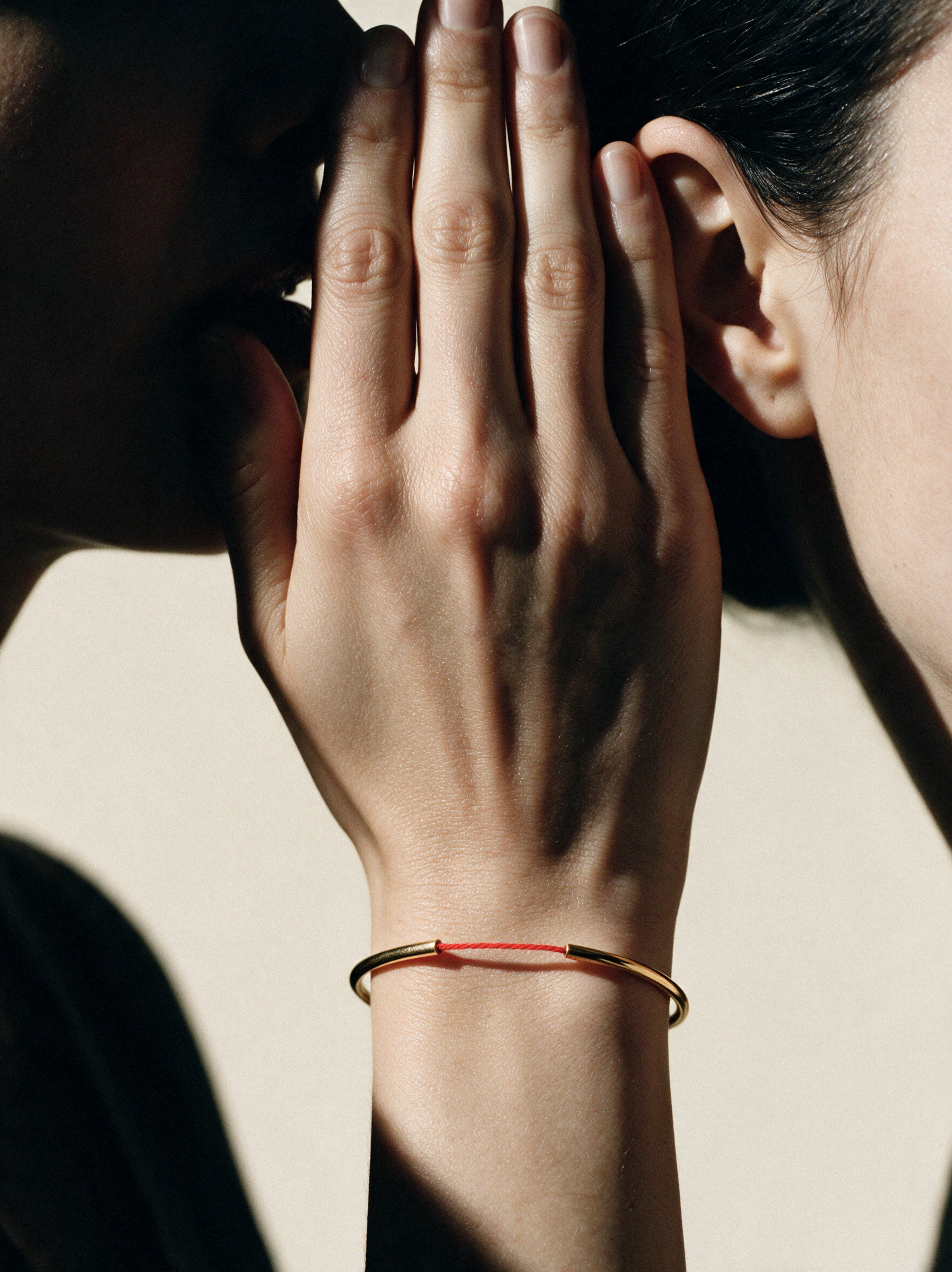
In our tradition the red thread is worn for protection. The Tiferet Bangle carries the original Kabbalah red thread inside it, and takes its name from the centre of the tree — the place between mercy and judgement.