
On Simchat Torah we reach the last word of the Torah — and don't stop.
There is a moment on Simchat Torah that I wait for every year.
The last lines of Deuteronomy are read aloud. Moses has died, the people stand at the edge of the land, and the Torah closes with the words l'einei kol Yisrael — "before the eyes of all Israel."
And then, in the same breath, before anyone can sit down, a second scroll is opened and someone begins again: Bereshit. In the beginning.
No pause. No gap. Not even one day in the year without the story being read.
The hidden heart
There is an old teaching I love about that moment.
The last word of the Torah is Yisrael. Its last letter is a lamed (ל). The first word of the Torah is Bereshit. Its first letter is a bet (ב).
Put the end and the beginning side by side, and they spell lev (לב) — heart.
The place where the story ends and the place where it begins again meet in a heart. I don't think that's an accident. Everything in between — the wandering, the arguments, the laws, the losses — is held inside it.
Why we dance in circles
On Simchat Torah we take every scroll out of the ark and dance with them in seven circles, the hakafot. Not in lines, not toward a stage. In circles.
A circle has no front row. No one leads it from above. The person who knows every verse by heart and the child who can't read a single letter move at the same pace — and the scroll stays closed. Nobody is reading. We are just holding it close.
Some communities even call the children up together, all of them under one tallit, so that no one is too small to be part of the ending and the beginning.
What this means for the rest of us
I think most of us are better at endings than we admit. A year closes. A chapter of life closes. Something we loved is finished.
Simchat Torah doesn't ask us to pretend the ending didn't happen. It reads the last line out loud. And then it hands us the first line again — the same story, but we are not the same people who read it a year ago.
That's what the circle is. Not going back to where we started. Coming back around, with more in our hands.
This week, when you reach the end of something, look for where it touches the beginning. The heart is usually right there.
Chag Sameach.
Rivkah
Next week: Bereshit, and the light that was hidden on the first day.
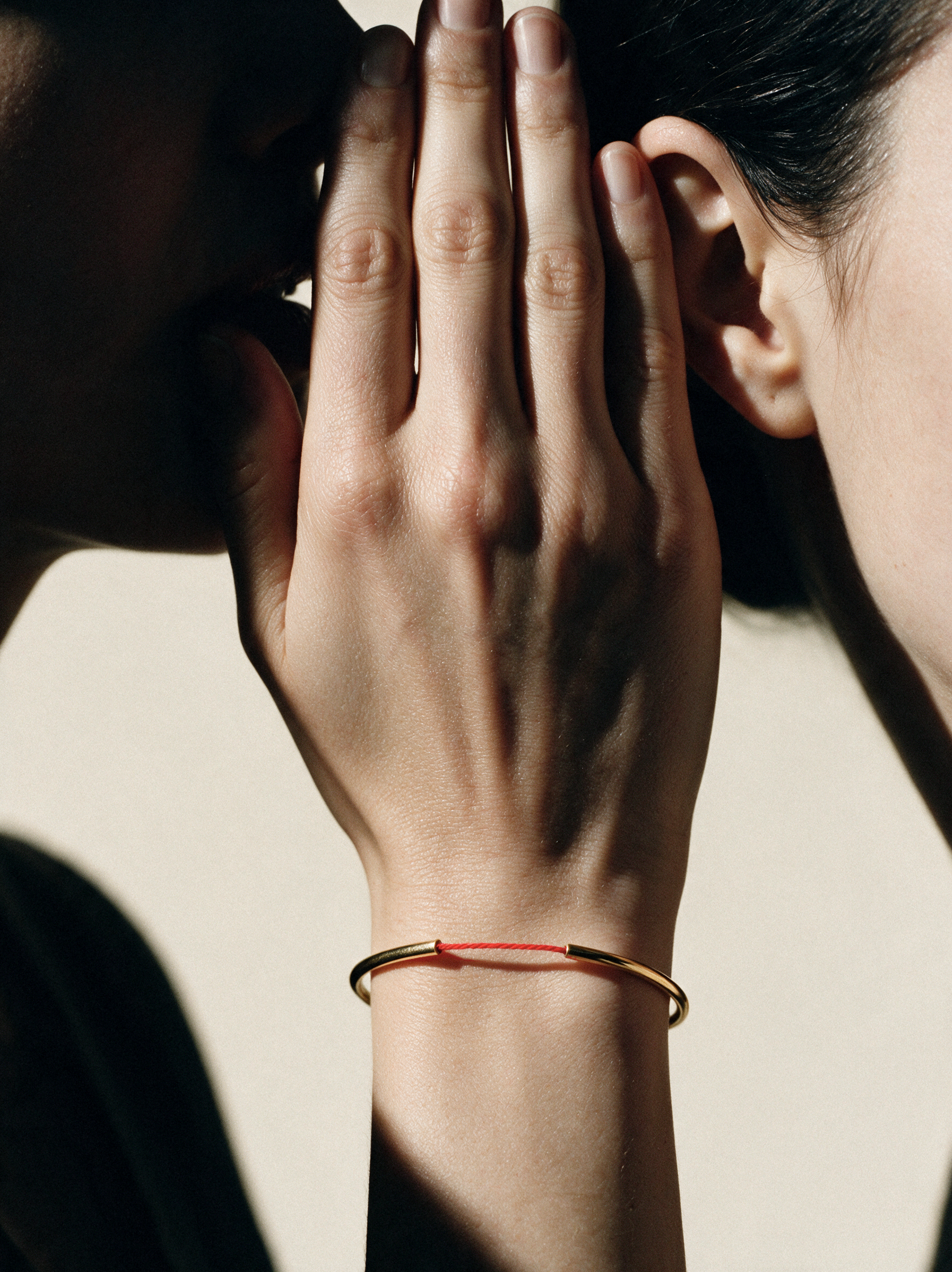
Oriya Jewels is handcrafted Jewish heritage jewelry — pieces made to be worn every day, for people who carry their story with them.